Friday, July 1, 2011

Life in South Africa

I've posted this story before... but I've had such an amazing response I thought I'd share it again. Thank you to everyone who has taken the time to write to me and share a little of their own stories with me. It's amazing to think we can connect over a few taps on the keyboard. Cheers!

A while ago I received an email from an American woman living in Asia, who is married to a South African and contemplating relocating to Cape Town. She asked for my thoughts on life here, in the long and the short term. She wondered about the things you hear in the news – the negative explanation points that seem to encompass a place, deservedly or not. Her email really got me thinking about my own experience here. I took my time to craft my reply to her and wanted to share it with you as well – I hope you’ll enjoy my candid response:

Dear friend-

Thanks very much for your mail. I’m sorry it’s taken me so long to come back to you. The truth is, your question kind of intrigued me and at first I wasn’t really sure what I would say. In a way I feel that it’s a privilege to share my perspective with you as you make this very important decision, and at the same time it is a huge responsibility to respond to you with honesty. Ultimately only you know whether moving to South Africa is a good decision for you. You might already know the answer you are seeking, somewhere deep inside.

My story in South Africa began a long time ago, in 1998, when I came here as a study-abroad student in university. At the time I didn’t know much about SA. I had heard about Nelson Mandela and apartheid and was fascinated with the idea of “Africa” – but otherwise I came with a mostly blank page, innocence, excitement and pure joy. I had always dreamt I would travel – and I couldn’t believe how lucky I was to finally board that plane and awake to sunrise over the Kalahari.

While I was here studying I fell in love. We met amidst the Southern Hemisphere’s largest sand dunes, in Alexandria. It’s a place not too far from Port Elizabeth where the dunes pile up like mountains. The view from the top makes friends at the bottom look like ants, far away, and then the blonde giants tumble down dramatically to the edges of the sea. I grew up in land-locked Pennsylvania and had never seen such harsh and abrupt beauty.

I went back to the States to finish my studies and six years went by. I had a new life but something was always missing for me. Eventually I had the chance to come to South Africa for a three-week holiday and then everything changed. I reunited with the friend I had fallen for before and we travelled together to the Transkeii on the East coast and had one of the most amazing times of my life. Those 21 days were full of turning points for me and memories that still make me smile – New Year’s Eve fireworks on a wild coast, feeling the humid tropical weather, driving through pouring rain and waving to locals who walked slowly, the same as they would on any other day, camping on a hillside next to a village where people live in huts, don’t have electricity and cows roam the beach. It was a world away, even now, and it helped me make my decision to move here, to be with this wonderful person and to carry that feeling of absolute freedom every day.

A year and three months later I moved here. It was difficult to leave my “old home” for my new one. I sold off most of my things, packed what I could, and arrived full of anticipation. I never looked back, even though this hasn’t been an easy journey. It took me a long while to make new friends and really feel like this is my home. My professional life was also full of adjustment and at first, cultural misunderstandings that proved frustrating. Soon after I arrived I personally experienced crime – something which served as the biggest stumbling block for me in adjusting here since it destroyed my sense of confidence and for a while, my free spirit. But time heals all things and now I can say I am living the life I dreamt I would live.

In the long run South Africa will present you with financial challenges – the rand does not go very far which makes international travel and every day shopping a budgeting exercise. There is talk of a national policy to weaken the rand further, making exported goods cheaper and more competitive but meaning that imports are that much more expensive. Crime is a reality that affects many people. The nation is awash in “transformation” and Black Economic Empowerment and while this is good for many it creates special challenges for white South Africans. The price of electricity is rising at a rate of 30+% each year. Quality education comes at a high price and with a good dose of competition for the limited classroom seats. The public healthcare system is troubled – there are stories in the news of hospitals having to close due to copper wire theft, babies dying due to unsanitary conditions. The president is a polygamist with five wives but still there are stories of his fathering children with other women out of wedlock – making his position as a role model in a nation awash in rising HIV / AIDS rates difficult to believe. Life in South Africa can be first world in some places, in some experiences, in some lifestyles – yet there are stripes of third world realities, struggles and corruption and the two sides cannot help but intersect at some points.

In the short term South Africa will offer you a beautiful life with wild and wondrous scenery, awe inspiring weather, joyous discoveries and memories for a life time. We’ve been to Mozambique where I slept next to the beach, snorkelled in clear warm water, ate prawns and discovered that at night there are hundreds, maybe thousands of crabs that come out and scamper along the sand. I’ve seen the greatest sand dunes of Namibia, in Sossusvlei, where the grains at the peak form a snake-like dragon highlighted by the first light of dawn. We camped in Etosha National Park and clung to our pillows while Honey Badgers snorted outside, in search of food and by day watched elephants and zebra drink at the watering hole. We walked in the zone of leopards and heard hyena at night in the distance. I’ve climbed to the peak of Monk’s Cowl in the mighty Drakensberg Mountains, 18 hours of steady walking, exhausted and exalted at the end. I’ve spent time learning to surf in the frigid Atlantic and the warm Indian Oceans. I’ve been surprised by a giant purple-domed jellyfish and later laughed at my own freak out. I am learning bits of Afrikaans and surprise locals by throwing in a word or two while talking. People are generally quite curious about me as an American and are inquisitive about life in the States and how I came to be here. I now live in Cape Town, one of the world’s most beautiful cities. We laugh that on weekends spent at home we still feel like we’re on holiday with all of the amazing things to discover. I’ve grown into a better person and learn new things every day. I miss my friends and family – and reunions are that much sweeter. I think about the things that are important to me and thank the universe for allowing me to be so lucky.

What happens to one person will never happen exactly to another we each have our own path and for that reason I think we must each make our own decisions. I hope you will make your decision carefully but believe that a dose of light heartedness goes a long way, and that sometimes the decisions made with our hearts are the most powerful ones of all. Thank you for the opportunity to share my story with you.

Wishing you all the best from the fairest cape in the whole circumference of the globe,

Theresa

Friday, June 17, 2011

150 Wine Farms, 40 Years of Perfection, 1 Amazing Wine Festival


From oysters, whales, jazz and daisies to cheese, olives, food and wine, it seems we have a festival for just about anything these days. Filled with stand after stand, sometimes our big day out turns into a big crowd-induced headache! But thankfully, there are still a few festivals where a truly authentic experience can still be had.

That’s right, it’s time to save the date for the 10th annual Stellenbosch Wine Festival, to be held 28-31 July at the Paul Roos Centre, preceded by Wine Week, from 22-31 July, when visitors can partake in rare and exclusive cellar door experiences at participating estates. This year will be the most exuberant celebration ever, marking the Stellenbosch American Express ® Wine Routes’ 40th anniversary and its unwavering focus on something that distinguishes not only the Cape, but South Africa, on a world stage. What’s that, you ask?

Wine.

Of course even the grandest of wines would feel lonely without its two best friends in tow – Great Food and Even Better Company – and visitors can look forward to the trio during the festivities. Not about big crowds, expo stands or secret charges, visitors can experience an honest good time spent indulging in conversation with their favourite winemakers, swirling up to 500 different wines (selectively, of course) and irresistible winter warmers – hearty meals planned to pair to perfection. Visitors have the rare treat of enjoying their favourite iconic estates – from Delheim, Simonsig and Kanonkop to Neethlingshof, Le Riche, De Trafford, Warwick Estate and many more – either under one roof, or at the cellar door.

With so much to look forward to, I spent some time chatting with Annareth Bolton, CEO of the Stellenbosch American Express® Wine Routes, about what makes Stellenbosch such a special place, and what visitors can look forward to at this year’s festival:

With 150 farms, the Stellenbosch American Express® Wine Routes offer something for almost everyone. Tell me about some of its most memorable highlights?

Being the heart of the Cape Winelands, we are seen as the pioneers of wine tourism. The Cape Dutch architecture is a big draw card, while the modern tasting rooms and restaurants have inspired many visitors to come back time and again. Spending only one day in Stellenbosch, you can taste wine with a rugby legend, go on a game drive, enjoy lunch at a top 10 restaurant, try your hand at fly-fishing, visit a wine museum and mingle with the locals.

The Wine Route has grown immensely since being formed 40-years ago – what are some of the most exciting innovations since the early days?

In 1971, when the wine route was formed, no tasting or purchasing was allowed at wine farms. There were no road signs or maps, let alone restaurants and guests houses on farms. This really was the start of wine tourism in South Africa, and many have followed suit. We now have hundreds of thousands of visitors, which led to a thriving industry which contributes to job creation, skills development and international recognition. When I started the Sundays in Stellenbosch campaign five years ago, only a handful of farms and restaurants were open, while we now have over 65 farms open on a Sunday, offering kids entertainment, informative wine-tastings, hiking-trails, picnics and world-class restaurants. Social responsibility is at the order of the day, with crèches for farm children, local employment, and a drive towards supporting local business. It really is a winning model for all.

Stellenbosch was recently recognised as the “2011 Wine Town of the Year” by Sweden’s prestigious Munskänkarna wine club, the first time a city outside of the European Union has been bestowed such an honour. What do you believe helped distinguish Stellenbosch above all the other contenders?

This is a truly wonderful honour and opportunity for Stellenbosch. South Africa currently holds 20,5% of the market share in the Swedish wine market, making us the largest exporter to their country. We are a world leader in wine tourism, with annual awards bestowed to our members. I really believe that my predecessors at this organisation have done a great job of promoting our excellent wines – a study has shown that consumers recognise Stellenbosch as a wine brand before South Africa. Now our focus is on promoting all that surrounds the bottle of wine, in other words the tourism offerings. We are picking the fruits of our hard work, and this recognition as one of the world’s greatest wine destinations, is well deserved!

Sustainability is gradually becoming a more prominent consideration both in the eyes of the industry and the consumer – how are the members of the Stellenbosch Wine Route embracing sustainability – and do you believe it impacts upon the quality of the wine?

Stellenbosch soil and properties are some of the most expensive in the world. It would be much easier to develop it all into housing and golf estates, but that is not the legacy we want to leave for the ones following in our footsteps. I think farming in Stellenbosch is one of the hardest financial things you can be busy with at the moment, but also the most rewarding. Someone once said that the people from Stellenbosch will be disappointed when they get to heaven! We have a great responsibility, which we take very seriously, and once again we are leading the industry when it comes to carbon neutrality, solar energy, bio-diversity, restoring indigenous plants and trees, and looking after our wildlife. A truly inspiring town to live in!

These days there are many wine festivals – tell me about some of the unique experiences visitors can have, that help make this festival the one that is “not to be missed.”

The Stellenbosch Wine Festival is the oldest in the country, and this year we are celebrating its 10th birthday in its current format at Paul Roos Centre. It is a wonderful opportunity to taste up to 500 wines, all under one roof. The opening night, the wine connoisseurs evening, is where you can meet the winemakers, in a relaxed and warm atmosphere. All the wines on show are available to purchase at special festival prices, in order for you to stock up you collection. Friday is our social evening, with live entertainment, food demonstrations and signature dishes from local restaurants participating in our gourmet lane. Saturday is our busiest day, while Sunday is family day, with a secure and fun environment for the kiddies, while mom and dad enjoy good company and music. We have shuttles from the V&A Waterfront, Canal Walk, Tygervalley, Paarl, Franschhoek and Somerset West, enabling all to arrive safely back home. We offer historical walks through town, fantastic accommodation specials, and the restaurants are all ready to welcome you with warm winter dishes and roaring fires.

If you could name just two things that make Stellenbosch special to you – what would they be?

The mountains surrounding our town make this a very special place to be. There is always something to do in our town – whether it’s attending a production in one of our theatres, live music, art exhibitions, mountain biking, wine tasting, shopping, drinking coffee in one of the many corner cafés, you will never be anything but inspired and entertained.

THE DETAILS

  • Tickets to the Stellenbosch Wine Festival range from R120 per person per day for online bookings (in advance, at www.webtickets.co.za) or R140 at the door, to R350 for the Golden Pass for the entire festival. The entry fee to the opening of the festival, an exclusive Wine Connoisseurs Evening from 16h00 till 21h00 on Thursday, 28 July, is R160 per person for online bookings or R180 at the door and includes gourmet delights
  • Whether your wallet is feeling light or loaded, you’re bound to find an accommodation packages that suits – click here for a comprehensive list
  • For more information call 021 886 4310 or visit www.wineroute.co.za

Sunday, June 5, 2011

The Perfectly Posh Petite Pongrácz

It could have been a scene out of a James Bond movie. Sunset over Cape Town, onboard a yacht, surrounded by beautiful people, fresh oysters and Pongrácz bubbly on ice. A view to kill. One could be forgiven for thinking 007 himself might emerge from the water, straight from Russia with love, and board the vessel in his dripping scuba gear, especially since he is in fact in town, filming the latest in the series, Carte Blanche.

Alas, it was not to be.

Not that I minded – who needs the spy who loved me when you already feel like a millionaire? It’s not every day you get to cruise out towards the horizon with a flute of Pongrácz in hand, taking in the view of the V&A Waterfront, Table Mountain, Lion’s Head and Signal Hill.

It was a spectacular celebration onboard the Tigger Too, a 55 foot luxury catamaran cruiser. Guests were served elegant canapés complemented by the über posh Petite Pongrácz, the new 375ml sized bottle that put the sparkle into any occasion, whether for bigger affairs when they ensure each glass served is chilled and crispy fresh, or your eyes only.

Eventually the bliss had to come to an end. One thing’s for sure, with times like these you don’t need to live twice.

The Details

  • The singularly noble Pongrácz and Pongrácz Rosé were named South Africa’s top Non-vintage and Rosé in the highly contested 2010 Wine Amorim Cap Classique Challenge
  • An exceptional blend of the classic Champagne varietals, Pinot noir and Chardonnay, Pongrácz is set apart by its crisp green apple tones and the nuttiness of freshly baked bread. The Rosé with its salmon hue is enchantingly dry with a wonderful foamy mouthful of black berry fruit and delicate yeasty notes that balances superbly with a dry palate.
  • The Pongrácz 375ml is available at approximately R58 and the Rosé at around R68 per bottle at selected wine shops, trendy bars and restaurants. For more information, visit www.pongracz.co.za
  • The Tigger 2 Royale is a 55 foot luxury catamaran cruiser based in Cape Town’s Victoria & Alfred Waterfront. It features a beautifully streamlined exterior and plush white leather interior. To plan your own Petit Pongrácz Party visit www.tiggertoo.co.za

Saturday, June 4, 2011

Newton Johnson's Dance with Pinot Noir

For Pinot Noir enthusiasts, the Hemel-en-Aarde Valley near Hermanus is like the Garden of Eden with more award-winning Pinots made here than any other place in South Africa. This is a true feat considering Pinot, known to some as the “heartbreak grape,” is the most difficult variety of grape, presenting challenges both in the vineyard and in the cellar. The climate of the valley plays an obvious role in the success its wine estates but I wondered if there wasn’t something more to the story so I spent an afternoon chatting with two of the Valley’s most renowned winemakers, Gordon and Nadia Newton Johnson.

From the start of our chat it became evident that Pinot Noir has captured not only their attention, but also their hearts. The couple spoke passionately, describing it as finicky yet elegant, beautiful, soft and expressive of the terroir where it is grown.

Nadia: “Once you’ve worked with Pinot there’s no turning back – you either fall in love with it or you...” Gordon: “... or you don’t understand it and push it aside.” Nadia finishes, “You just decide, ‘no’. But if its grabbed you – that’s it.”

Pinot’s expression of terroir is the one characteristic the Newton Johnson’s focus on the most, acknowledging that terroir differentiates their Pinot from others produced in the valley:

Gordon: “I think we’ve gone further to discover what Pinot will do on soils within the valley. There are different expressions between the Pinot that we’re making compared to what other wine estates in the Valley are making.” Nadia continues, “Clay soil holds a lot of nutrients and iron – it almost forms the backbone of the wine, gives it a dark, bigger kind of structure. But our soils are a little lighter, not as much clay. As soon as you take Pinot to lighter soils it becomes more fragrant, almost prettier, more beautiful. I think that’s where we are with our Pinots.”

Not only is the couple single-minded about their passion for Pinot, but also towards their hands-on approach to winemaking:

Nadia: “Sometimes people don’t understand two winemakers. When it comes to the styling of the wine we make those decisions together. Gordon, “We’re interchangeable.” Nadia, “That’s the thing – we’re so interchangeable. Between the paperwork and whatever work needs to be done in the winery it doesn’t matter which one of us does it. And we actually do the work physically ourselves – we believe that all those little bits that you put in make the difference between making a great wine or just a good wine.”Gordon: “Some of our wines are expensive, we’re getting more expensive. We feel we’ve got to be hands-on to maintain that level and take it further. We’re not just winery owners, we are wine makers. We always want to be that – we always want to have that connection with the winery and the vineyards.”

Thinking of the future, the couple are focused on developing more sustainable processes on the farm, like water conservation, and are moving away from the use of artificial influences like pesticides, fertilizers and added yeast. Although more challenging, they prefer a more natural approach which they believe will positively impact the soils in the long term, and help create an even more unique expression of terroir in their wines.

Gordon, “Water is a big part of sustainability, and we have a whole water treatment plant here. It takes 9 litres of water to make 1 litre of wine, so any waste water we create, we recycle it and put back into the water table. We also keep away from pesticides and prefer to treat our insect pests biologically with the release of natural predators, like Lady Birds and wasps. We’re also moving away from synthetic fertilizers – and are moving towards using the waste on our farm instead. These are all small steps towards becoming more sustainable.” Nadia, “We need to keep our soils alive and strong – that’s the most important thing. And as we become more sustainable we have noticed a major change in our wine – it makes us more individual. It’s really amazing to see how far you can take it – to see the qualities in the soil that can be expressed by a wine.”

It was an absolute treat to be able to spend time getting to know the Newton Johnsons. The key to their success seems to lie in their passion – passion for Pinot, for what they do, for preserving the land for another generation. If Pinot is a heart-break grape for some it’s certainly not for the Newton Johnsons – for them it’s a love affair, and so it’s no surprise their wine has seen such success. After all, it’s handcrafted with love – and anything made with love tastes better.

Newton Johnson is located in the upper Hemel-en-Aarde Valley just outside Hermanus on the R320. Stop in for wine tasting & buying, or have lunch at the stunning Heaven Restaurant with to-die-for-views of the valley. For more information, visit www.NewtonJohnson.com

Wednesday, April 27, 2011

Country Life and Everything Nice

Whether you’re an equestrian, an epicurean, or an urban escapee – getting away from it all in Noordhoek gets you more than what you started with.

I’m standing in a curious place – a place like no other in the world. A bold statement, I know – afterall, none of the usual excitements exist here. No dazzling city lights, shopping meccas or restaurant rows, no glitz nor glamour. Yet it’s precisely in this emptiness – in what is not here – that this place gains value. It’s a place with an abundance of that curious country feeling – that something that ticks inside of us in the face of long sandy beaches framed by bushveld, dunes and a milkwood forest. This is a place where the wind has a way of ruffling your hair and carrying any form of status away like so many grains of sand, and where the excited thrill of urban exultation peters out like a tiny stream in the face of the ocean’s vastness.

This is Noordhoek, a small corner on the fringe of cosmopolitan Cape Town – overlooked by some, passed through by others. For the rest of us, the local’s term “Noordhoeked” has meaning. Only 35-minutes from the centre of Cape Town, just getting here is a spectacular journey through Camp’s Bay and her Twelve Apostles, along the coast past Llandudno, Hout Bay and her faithful Sentinel, and culminating along one of the world’s most famous roads – Chapman’s Peak Drive.

Just two narrow lanes carved into the side of an impending cliff-face that extends 600 meters over your head and falls nearly as far into the crashing Atlantic below, it offers the kind of driving that inspires the dreams of motoring enthusiasts and colours the knuckles of their not-so-adventurous companions gleaming white. If you can pry you eyes away from the road you’ll be lavished with 180-degree panoramic views over the blue Atlantic, across the white sands of Noordhoek’s 8-kilometer long beach, until the last few rocky outcrops of the peninsula curve just out of sight.

The roads 114 twists and turns eventually deliver you to Noordhoek where you’re greeted by Cape Point Vineyards, home to some of South Africa’s most highly acclaimed wines, including Sauvignon Blancs that make regular appearances in the 5-star John Platter SA Wine Guide rankings and which have easily broken through the 90-point benchmark set by Wine Spectator for “outstanding wines of superior character and style”. Not widely available, these wines are a true reflection of the local terroir and the perfect welcome in a glass.

Next stop, go for a meander in the Village – the tourism office is located here along with a collection of shops and restaurants, not least of which is the humbly-named Food Barn. The chef, Franck Dangereux, spent his early years training in 3-Michelin starred restaurants in France before eventually joining the team at Constantia Uitsig’s La Colombe, where his influence helped make it one of the world’s top 50 restaurants. Now he’s realising his dream of running his own restaurant and spending more time with his young family. You can choose to dine in or shop the deli for a bounty of culinary delights – locally sourced artisanal cheese, olives and spreads, even quiches and to-die-for gourmet sandwiches. Did I mention the on-site bakery? Only those of merciless willpower can withstand the temptations of the multitude of fresh cakes, pastries and bread that seem to stand in formation like a small army intent on liberating your waistline.

Once you’ve made your contribution towards the ‘Battle of the Bulge,’ make your way towards the Common where you can spread out your treasures for a casual picnic, wander along the babbling stream where hundreds of Arum lilies bloom in springtime, or get to know the equine beauties resting in the adjacent paddocks. No ordinary creatures, these gentle beasts with their soft, chestnut eyes and curious nature are mostly investments of the purebred kind. If you fancy a sunset ride along the beach, never fear – the folks at Sleepy Hollow Horse Riding just down the lane will completely kit you out with riding gear, a safety lesson and a trusty (if semi-retired) steed.

Following the road towards the beach, you’ll come across the Red Herring – a local institution that hosts formal wine and food pairing evenings next to a roaring fire. Upstairs you’ll also find Skebanga’s, a casual pub famous for its range of pizzas, rooftop terrace and local flair. Live music is also a regular feature.

Just across the road you’ll find the turnoff to Monkey Valley – a collection of timber chalets nestling in the embrace of the Milkwood forest. My favourite is along a private pathway towards the beach, complete with a wraparound terrace and a millionaire’s view – 180-degrees of undeveloped bush, a seasonal lagoon (and occasional home to migrating pink flamingos), and unspoilt beach – all wrapped up in the sounds of the sea. Sitting on your terrace, the sun starts to set. The horses and their riders appear as if on cue, making their daily formations across the sand. It’s Golden Hour now – the dunes are rich in colour from green to dark brown and billowy yellow. A little later the sounds of frogs present themselves, punctuating the silence of nature.

If you’re lucky, the rare Leopard Toad might make a quick appearance while fireflies dance on the horizon, as if to add their glow the sky now radiating hues of yellow, orange, pink and purple. One by one, thousands of twinkling lights join in the chorus, illuminating the sky as it gradually grows darker – not dazzling city lights this time – but stars.

THE DETAILS

Where to Eat:

  • The Food Barn: Restaurant (reservations a must) and Deli; www.thefoodbarn.co.za
  • The Red Herring (formal) or Skebanga’s Sunset Bar (local is lekker): www.theredherring.co.za

Where to Stay:

  • Monkey Valley: Live like a millionaire, if only for one night in these private, self-catering chalets; Restaurant on on-site; www.monkeyvalleyresort.com

What to Do:

  • Cape Point Vineyards: Wine Tasting options priced at R10, R30 or R50; Mon-Fri 09h00-17h00, Sat 10h001700 and Sun 10h00-16h00; www.noordhoekvineyards.co.za
  • Shopping at the Village
  • Picnic in the Common
  • Beach Walk
  • Sleepy Hollow Horse Riding: 2-hour beach trail from R400 per person; www.sleepyhollowhorseriding.co.za

Sunday, March 13, 2011

Scenic Drives of South Africa

Few things in life bring to mind such idyllic thoughts of freedom than the road trip – of driving through wide open spaces, the wind in your hair and the thought that you can go just about anywhere. Most visitors to South Africa have heard of the Garden Route, but with its stunning natural landscape, impressive rock formations and deep gorges, South Africa has even more to offer. Try one of these rides on for size and you’re guaranteed a view you’ll remember for a lifetime:

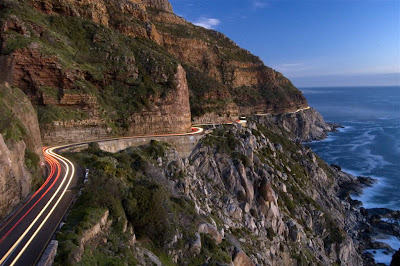
Camp’s Bay to Chapman’s Peak, Cape Town

Begin your journey just 5-min from the City Bowl. The well-maintained road descends into the arms of famed Camp’s Bay, framed on your left by the Twelve-Apostles, part of the Table Mountain range, and on your right by the sea. The road hugs the mountains and meanders south through Hout Bay, culminating along Chapman’s Peak Drive where dramatic rust-coloured cliff-faces extend above before succumbing to the crashing sea below.

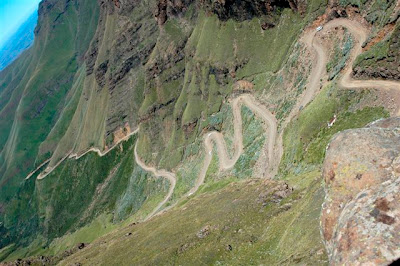
Sani Pass, Drakensberg

This drive is not for the faint-hearted, the novice driver, nor the average rental car. The landscape is stark, the road is unpaved and potholed, and don’t even think about the state of the guardrail (there isn’t one). One treacherous hairpin curve after another, this adventure road climbs up into the clouds until you reach the mountain kingdom of Lesotho where you’ll want to calm your nerves with a drink at the highest pub in Africa.

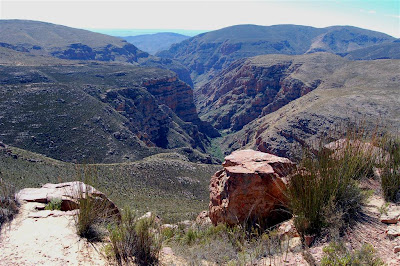
Swartberg Pass, Klein Karoo

Between Oudsthoorn's Cango Caves and Prince Albert, this unpaved road tip-toes along the mountain’s edge offering sweeping views of the shrubby Karoo-landscape far below, a gentle welcome before it takes you on a journey of secrets, bobbing and weaving its way through canyon rockwalls as old as fossils, giant proteas that flower pink and yellow in season, and endless varieties of the fynbos so unique to South Africa.

Route 62, Western Cape

Rolling vineyards, tidy farmhouses and quaint country villages give way to the dry openness of the Karoo between Ashton and Oudsthoorn on this scenic alternative to the N2, dubbed the longest wine route in the world. On a summer’s day the heat along this route rises in shimmering waves – if it’s too much, take one of the many roads heading south towards the sea where you might be lucky enough to find a cooling waterfall bursting from the craggy mountain face.

Seweweekspoort, Klein Karoo

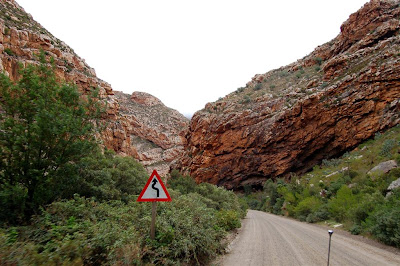
The lines in the jagged rock walls that line either side of this narrow road reveal the crushing tectonic power that formed them – vertical lines slope to horizontal and back again. Hues of red, orange and yellow blanket the space. In the quiet of centuries, one can’t help but think back to the days of pioneers, when this keyhole through the seeming impenetrable mountains provided a merciful escape from the hardships of the interior.

Monday, March 7, 2011

Humble and Historic – Tulbagh Awaits

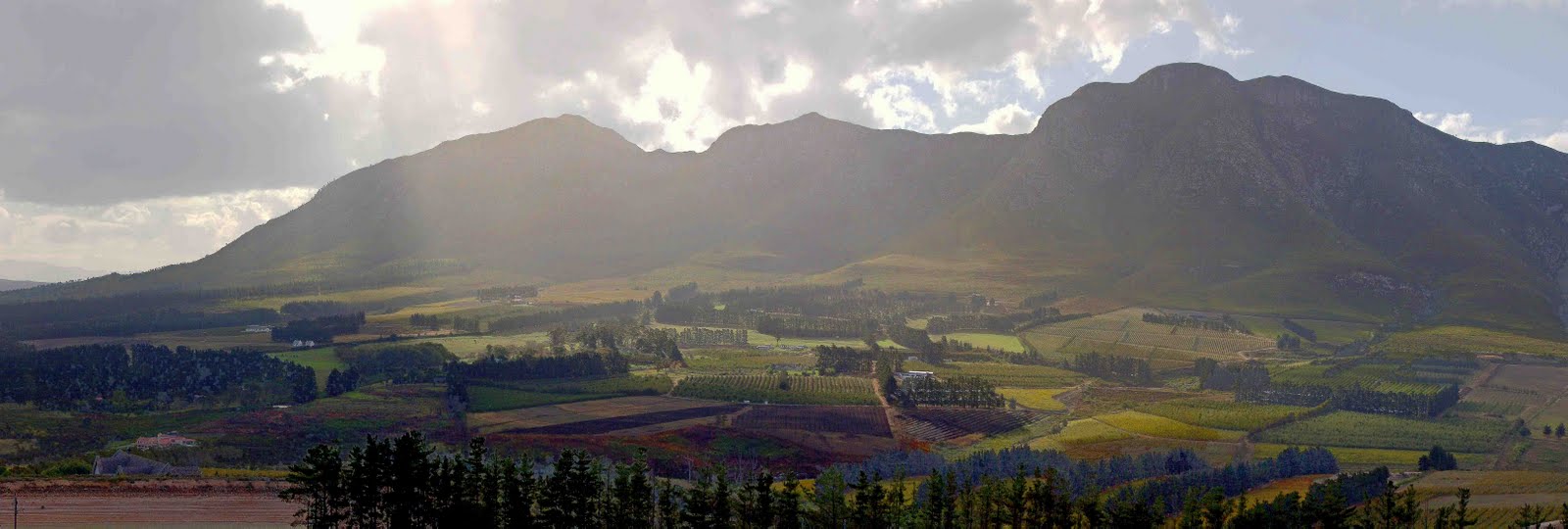
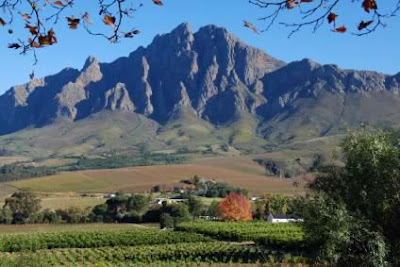
Tulbagh. It’s a place that’s just out of reach but one that seems to keep its hold on you long after you’ve left. Beyond the grasp of tourism, one and a half hours from Cape Town, it’s an historic haven off the beaten wine lands tracks in Stellenbosch and Franschhoek. A rare treasure, its honest authenticity has survived its modern day need to play on the world stage as a premiere wine making region.

Church Street is perhaps the most famous example of Tulbagh’s past – building after building it is a national monument of Cape Dutch architecture, painstakingly restored after a devastating earthquake destroyed the original structures back in the 1940’s. Perhaps it was only a latent aftershock from the “big one” that must have formed Tulbagh into such a dramatic valley so many millennia ago.

No longer private homes, these days the national monuments of Church Street have mostly been converted into an array of B&B’s, curios and cafés. With all the modern excitement it’s difficult to imagine the truth of the past, when Tulbagh’s first citizens bustled along this lane conducting the business of the day. But for the observative, a raw reminder of Tulbagh’s founding souls can be found at the Church itself, just at the edge of town. Walk through the gates and the respect of generations will envelop you as your eyes settle on one ancient tombstone after another. The names, the dates – the only thing these souls have left on God’s earth – now crumbling into the distance, about to join the bones of their patrons in surrender to the elements. Nothing lasts forever – and to me it feels like an honour to hold testament, if only for a moment.

Just a few minutes out of town, the road meanders into the countryside past picturesque wine estates. Drostdy-Hof Manor stands watch like old faithful, flanked by others who hold the valley’s humility steadfast whilst making an impression on the palettes of unsuspecting wine lovers everywhere: the fourth-generation Twee Jonge Gezellen Estate “The House of Krone”, Saronsberg Cellar, and the historic Oude Compagnies Post. It’s easy to get swept up in the romance of the place – and the chapel at Montpellier stands like a beacon to such notions, its small stature belying its position amongst the vines on a hillside of monumental beauty.

It seems to me that the people who visit Tulbagh have something in common with the people that live there – maybe we’re drawn by the call of the mountain range, the quiet that moves on the breeze, or even the past that seems to whisper from every rock, nook and cranny. Something draws us all there – something that makes the jagged mountain peaks that curve overhead in the shape of a horseshoe landscape feel like home’s embrace.